
At the 45th Annual General Meeting of Reliance Industries (RIL) in August, chairman and managing director (CMD) Mukesh Ambani described the company as an "unputdownable book" with never-ending chapters of success. "Reliance grew from strength to strength because we internalised the founder's mindset of purpose, philosophy and passion," he said. Wednesday marked the 90th birth anniversary of RIL founder Dhirubhai Ambani.
TCS was the top gainer in the Sensex pack, rising over 1 per cent, followed by Infosys, Reliance Industries, HUL, Nestle India and ITC. NSE Nifty ended 10.05 points higher at its new closing record of 16,634.65.

Total net debt-equity ratio improves for third consecutive year, while investment in new projects hits a 10-year low, says Krishna Kant.

Vinay Umarji

Sectors that will drive profit growth include refineries, private banks, capital goods, cement, fast moving consumer goods, metals and oil & gas. Sectors with disappointing growth are public sector banks, construction, media, pharmaceuticals, steel, textiles, telecom and tyres.

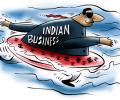
The companies' combined net profit declined by 10.1 per cent y-o-y during June '19 quarter against 26.2 per cent y-o-y growth a year ago.
The Indian consumer goods industry holds huge potential for growth as affordability is increasing and size of the low income segment is shrinking, according to R K Shukla of National Council for Applied Economic Research.
FMCG players -- Dabur, HLL, PSU BPCL, Korean car maker Hyundai, liqour barron Vijay Malaya's Mcdowell and TVS motors -- are among the major companies found to violate Advertising Standards Council of India code.

Baba Ramdev's Patanjali Ayurved is considering bidding for the title sponsorship of the upcoming Indian Premier League, according to a company official.
ONGC was the top loser in the Sensex pack, shedding around 4 per cent, followed by NTPC, PowerGrid, M&M, Nestle India, SBI and HCL Tech. On the other hand, HUL, Bajaj Auto, Bharti Airtel, Bajaj Finserv were among the gainers.
Equity indices overcame a wobbly start to clock gains for the third session on the trot on Tuesday, propped up by banking, metal and energy stocks amid a mixed trend in global markets. A recovery in the rupee also bolstered sentiment, traders said. The 30-share BSE Sensex advanced 246.47 points or 0.45 per cent to settle at 54,767.62 after starting the trade on a weak note. In a volatile session, the benchmark hit a high of 54,817.52 and a low of 54,232.82 during the day.

'We never go overboard on any stock, no matter how good it may seem.'

Tata Steel was the top loser in the Sensex pack, plunging over 8 per cent, followed by SBI, Dr Reddy's, Kotak Bank, Sun Pharma, Bajaj Auto and L&T. NSE Nifty declined 118.35 points or 0.71 per cent to 16,450.50.

'What we have to think about is, how to improve the efficiency of public sector banks.' 'You have to make decision-making more prudent, and free from government intervention.'
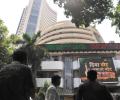
After a positive opening, the 30-share BSE Sensex suddenly faced selling pressure in late-afternoon trade. It finally settled just 5.67 points, or 0.01 per cent, lower at 39,586.41.

Equity benchmarks Sensex and Nifty ended marginally lower on Tuesday as investors booked profits at higher levels amid a mixed trend in global markets.

After losing two festive seasons to Covid-led restrictions, 2022 is seeing an uninhibited celebration of festivals. This is pushing up discretionary spend, which is attracting advertisers and brands, who are ready to capitalise on the momentum. The festive season has begun with Onam and Ganesh Chathurthi held earlier this month in Kerala and Maharashtra, respectively.

The 30-share Sensex ended up 214 points at 27,890 and the 50-share Nifty closed up 52 points at 8,430.
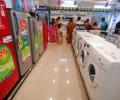
The festival season has already begun in the west and south of India with Ganesh Chaturthi and Onam, respectively, and consumer companies are witnessing a pick-up in sales compared to pre-Covid levels. Retailers, fast-moving consumer goods (FMCG) and consumer durables companies expect their sales to grow in double digits this festival season compared to pre-pandemic times, as there are no curbs on movement now. Adani Wilmar expects sales volume to be higher by 15-20 per cent as rural India has largely witnessed good monsoon rains, and employment has picked up in urban areas.

"Taking forward the brand's journey towards a more inclusive vision of beauty, the company will stop using the word 'Fair' in the brand name 'Fair & Lovely'. The new name is awaiting regulatory approvals and we expect to change the name in the next few months," Hindustan Unilever Ltd (HUL) said in a statement. As part of the rebranding, the company will also be announcing the new name for the 'Fair & Lovely' Foundation, set up in 2003 to offer scholarships to women to help them pursue their education.

Hiring activity witnessed a 6 per cent year-on-year growth in March this year, supported by a rebound in economic activities and led by sectors such as banking and telecom, according to a report. However, there was a marginal dip of 2.4 per cent in hiring activity as compared to February, owing to the appraisal season, according to the Monster Employment Index (MEI). "Two years into the pandemic, it is heartening to see that the Indian economy has overcome setbacks and challenges with hiring momentum exceeding pre-COVID levels by 6 per cent this year compared to 2020," Monster.com, a Quess company, CEO Sekhar Garisa noted.

IndusInd Bank was the top loser in the Sensex pack, shedding over 3 per cent, followed by Tata Steel, NTPC, Bharti Airtel, HCL Tech, ICICI Bank, M&M and HDFC Bank. NSE Nifty fell 120.30 points to 15,632.10.
Aon Hewitt, the global human resource consulting and outsourcing business of Aon Corporation, has announced the results of its 7th Best Employers in India 2011 study.
FMCG and retail giants are making good use of technology to reach out to rural India.

ICICI Bank was the top gainer in the Sensex pack, rising over 3 per cent, followed by ITC, SBI, HCL Tech, Axis Bank, Bajaj Finserv and Tech Mahindra. NSE Nifty advanced 32 points to 15,856.05.
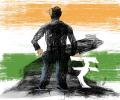
'The classic thing we need as a country is the virtuous cycle where you have robust demand which leads to more capital spending which in turn leads to more job creation and more money in the hands of people.'
Across the country, companies have stepped up their act to contain the crisis. IT and other new economy firms seem to have taken a lead.
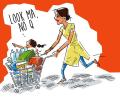
The consumer buying patterns and preferences have changed significantly with categories like health and pharma, FMCG and agriculture seeing a surge and exponential growth along with the rising number of first-time online shoppers.

Debt-ridden Future Group is now focusing on saving and rebuilding firms such as -- Future Lifestyle Fashions, Future Supply Chain Solutions, Future Consumer and Future Enterprises, after the Rs 24,713-crore deal with Reliance Retail was rejected by secured creditors, according to industry sources. However, Future Group's flagship firm Future Retail Ltd (FRL), which has nearly Rs 18,000 crore debt, is bound to face the corporate insolvency resolution process before the National Company Law Tribunal (NCLT). Other companies like Future Enterprises Ltd (FEL), Future Lifestyle Fashions Ltd (FLFL), Future Supply Chain Solutions Ltd (FSCSL), Future Consumer Ltd (FCL) can sustain on their own and can be rebuilt by restructuring their liabilities with the help of current lenders and investors, said an industry source close to the Future Group.

Higher prices are burdening household budgets and threatening the margins of leading manufacturers.

Ajit Mishra, vice president, Research, Religare Broking, answers your stock market queries.

Violation of the ban will invite punitive action, including a fine or a jail term or both, detailed under Section 15 of the Environment Protection Act (EPA) and under bylaws of respective municipal corporations, they said. For effective enforcement of the ban, national and state-level control rooms have been set up and special enforcement teams formed to check illegal manufacture, import, stocking, distribution, sale and use of banned SUP items, officials in the ministry said.

Titan was the top loser in the Sensex pack, shedding around 2 per cent, followed by Nestle India, HUL, HCL Tech, Infosys, ITC and Kotak Bank. On the other hand, Bharti Airtel, IndusInd Bank, Axis Bank, Bajaj Finserv and L&T were among the gainers.

Google is the most attracitve employer in India followed by Sony

'Enterprises have become more demanding in terms of their productivity expectation from their employees.'
The government is the biggest consumer and investor in the economy. And once it starts cutting back on expenditure to bring down fiscal deficit, it will affect corporate earnings.

This season, the nature of the advertising game has changed dramatically with TV and digital rights going to different entities.

Patanjali Ayurved's rise has prompted most other babas to go back to the drawing board. Most of them are either scripting or re-jigging their business plans, says Arvind Singhal.
